The Three Websites Every Icelander Checks Before Driving Anywhere
There is a habit every Icelander has that almost no visitor picks up.
Before driving anywhere that is not a routine trip, we check
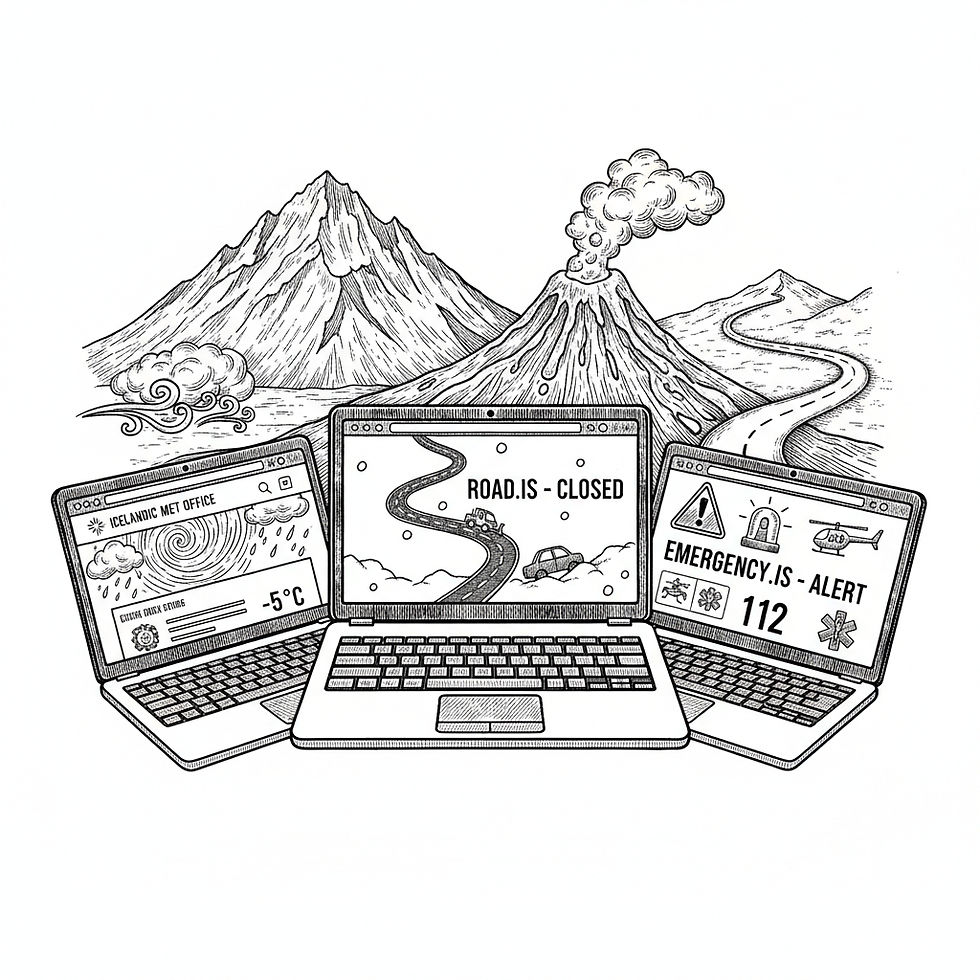
. Not the phone's default weather app, which will confidently tell you it is four degrees and cloudy while a storm warning sits over the route you are about to take.
Three specific services, every time, and it takes about ninety seconds.
This is probably the most useful thing anyone can teach you about travelling here, and it applies in July as well as January.
Why The Phone Weather App Is Not Enough

A default weather app gives you temperature and a symbol for a broad area.
That misses the two things that actually matter in Iceland.
Wind. This is the hazard visitors consistently underestimate. Iceland does not usually get catastrophically cold. It gets catastrophically windy, and wind is what closes roads, rips car doors off their hinges and turns a straightforward drive into a genuinely frightening one.
Local variation. Conditions change dramatically over short distances here. It can be calm and clear in Reykjavik while a mountain pass an hour away is closed. A regional forecast smooths all of that away.
The three services below do not smooth it away. That is the point of them.
The Three, And What Each One Is For

Vedur.is — the weather
Iceland's official meteorological office. This is the forecast that matters.
Two things to look at specifically.
The warnings map. Colour-coded by region, from yellow through orange to red. Yellow means be aware. Orange means be prepared and reconsider travel. Red means do not travel, and it is issued rarely and meant literally.
The wind forecast, which is given in metres per second rather than miles per hour. That unit catches people out, so it is worth internalising a rough scale:
Around 10 metres per second is a fresh, noticeable wind.
Around 15 is unpleasant to drive in and will pull at the car.
Around 20 is when you should be seriously reconsidering the journey.
Above that, do not.
One specific warning about car doors. Above about 15 metres per second, opening a car door in the wind can tear it clean off its hinges. This happens to visitors constantly, it is expensive, and most rental insurance policies specifically exclude wind damage to doors and paintwork. Hold the door with both hands, open it facing away from the wind, and never let a child open one.
Road.is — the roads
Run by the Icelandic Road and Coastal Administration. This shows live road conditions and closures on a map.
Roads are colour-coded by surface condition, running from clear through slippery, snow-covered and icy to impassable or closed.
Two things matter here.
Closed means closed. It is not advisory and it is not a challenge. Driving past a closure barrier can invalidate your insurance entirely, and it puts the volunteer search and rescue teams at risk when it goes wrong.
Check it the morning you travel. Conditions change overnight and the picture at 8pm is not the picture at 8am. This is the single most common mistake.
SafeTravel.is — the alerts and the plan
Iceland's official travel safety service, run in association with the search and rescue organisation.
It publishes alerts, and it lets you register a travel plan, which means telling somebody where you intend to go and when you expect to be back.
For a standard Golden Circle day this is not necessary. For anything remote, anything in winter, or anything where you are going somewhere with poor phone coverage, it takes two minutes and it is exactly how these things are supposed to work.
What To Actually Do With The Information
Checking is only useful if you are willing to act on it.
Build flexible days. Have a plan A and a plan B, and decide which one you are doing over breakfast rather than committing the night before.
Have an indoor alternative ready. A museum, a pool, a lagoon, a long lunch. On a bad-weather day in Iceland, the pool is what locals do.
Never let a booking force the decision. This is the trap. A paid tour or a timed entry creates pressure to drive in conditions you would otherwise avoid. Most operators are decent about weather cancellations, and no ticket is worth it.
Treat orange as a stop sign, not a challenge. Orange warnings genuinely mean reconsider travel.
Turn back without embarrassment. Icelanders do this constantly. It carries no stigma at all, and every local has abandoned a journey at some point.
The Seasonal Shape Of It
Winter, roughly November to March. Snow, ice and short daylight, and the three checks are essential every single morning. Assume at least one day of your trip will need rearranging, and you will be relaxed when it happens.
Spring and autumn are the changeable ones. Conditions swing fast and mountain passes can be very different from the coast.
Summer still needs checking, and people are surprised by that. The risks change rather than disappear. High winds, dense fog, and heavy rain, with wind again the main one.
Why Being Based Near The City Helps

There is a practical argument for staying close to the capital that only becomes obvious in bad weather.
When you are based in the Reykjavik area, a cancelled day is an inconvenience rather than a crisis. You can go to a pool, a museum, a restaurant, or simply stay put comfortably.
When you are halfway round the ring road with a booking three hours away, weather becomes a genuine problem, because doing nothing is not comfortable and pressing on is the only option that feels like progress.
From the villa in Kopavogur, a scrapped plan means the hot tub, a film and going tomorrow instead.
Frequently Asked Questions About Iceland Weather And Roads
What websites should you check before driving in Iceland?
Three. Vedur.is for the official forecast and colour-coded warnings, Road.is for live road conditions and closures, and SafeTravel.is for alerts and to register a travel plan. Check all three on the morning you intend to travel rather than the night before, because conditions change overnight.
What wind speed is dangerous for driving in Iceland?
Iceland gives wind in metres per second. Around 15 is genuinely unpleasant to drive in and pulls hard at the car. Around 20 is the point to reconsider the journey. Above about 15, opening a car door in the wind can rip it off its hinges, and most rental insurance specifically excludes wind damage to doors and paintwork.
What do the colours mean on Icelandic road condition maps?
Road.is colour-codes roads by surface condition, from clear through slippery, snow-covered and icy to impassable or closed. Closed means closed rather than advisory. Driving past a closure barrier can invalidate your insurance and puts volunteer rescue teams at risk if it goes wrong.
Do you need to check the weather in summer in Iceland?
Yes. The risks change rather than disappear. Summer brings high winds, dense fog and heavy rain instead of snow and ice, and wind is the hazard that catches visitors out in every season. The ninety-second check is worth doing in July as much as January.
What is SafeTravel.is?
Iceland's official travel safety service, run in association with the search and rescue organisation. It publishes travel alerts and allows you to register a travel plan, meaning somebody knows where you intended to go and when you expected to return. Sensible for remote or winter journeys.
Can visitors drive in Iceland in winter?
Yes, with preparation and genuine flexibility. Check the three services each morning, keep plans loose, and be willing to cancel a day without resentment. Most winter difficulties involve visitors who committed to a plan the weather had already ruled out, usually because a booking made them feel they had to go.
Ninety Seconds, Every Morning
It is the most useful habit you can pick up here, and it is entirely free.
Vedur for the weather. Road for the roads. SafeTravel for the alerts. Then decide over breakfast.
Iceland SJF Villa is in Kopavogur, close enough to Reykjavik that a weather day is an easy day rather than a wasted one. Hot tub, sauna, and somewhere genuinely comfortable to wait it out.


Comments