Two Restaurant Nights, Not Fourteen: How To Eat Well In Iceland Without Flinching
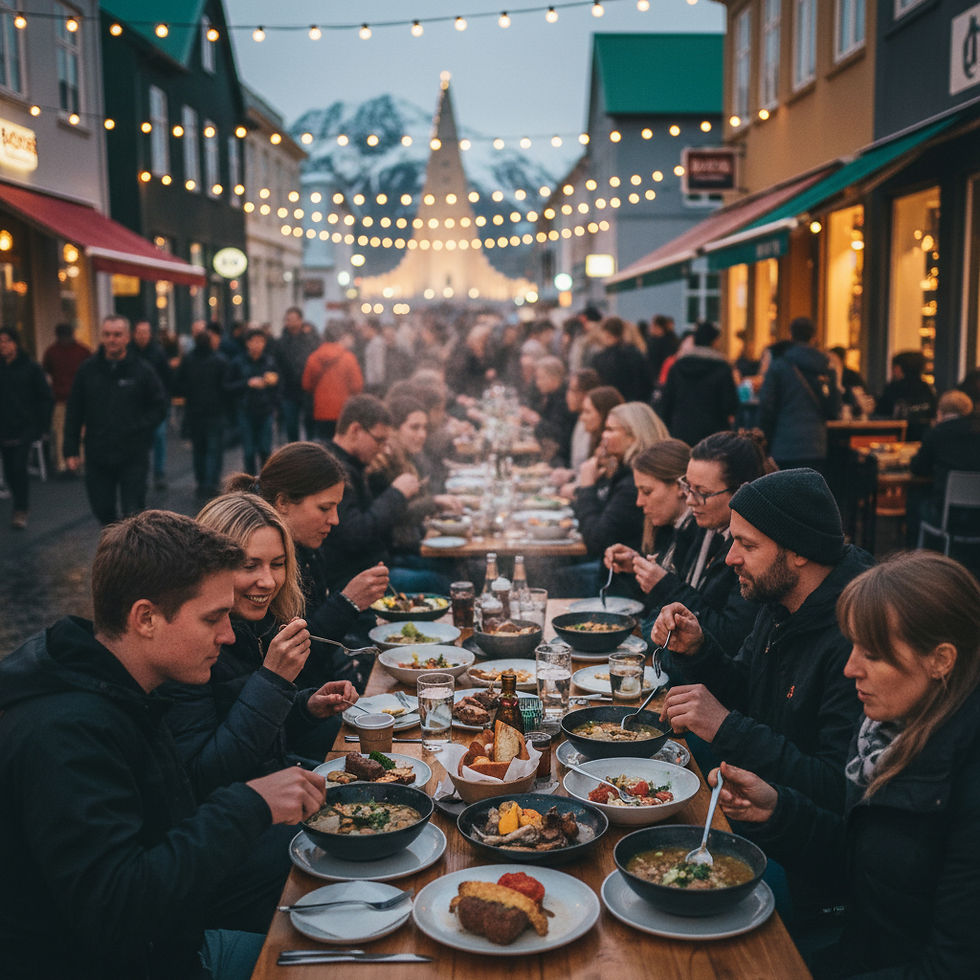
We have written before about the supermarket, the pink pig, and how self-catering transforms an Iceland food budget.
This is the other half of that conversation, because eating in every night is not the goal.
Reykjavik's food scene has become genuinely good over the last decade. The point of cooking most nights is not avoiding restaurants. It is being able to walk into two or three properly good ones without doing arithmetic at the table.
Here is how to choose them.
The Rule That Makes It Work

Cook most nights. Eat out deliberately.
A family cooking breakfasts, packing road-trip lunches and doing half their dinners at the villa can eat at genuinely good restaurants two or three times in a week and still spend less than a family eating out twice a day.
The difference is not deprivation. It is sequencing. You are trading fourteen unremarkable meals for three memorable ones and a fridge full of good food.
That framing changes the whole trip, because the restaurant nights stop being a cost and start being an event.
What To Actually Eat
Lamb is the standout. Icelandic sheep spend the summer roaming freely on highland pasture, eating wild herbs and grasses. The meat genuinely tastes different, and if you eat one thing here, make it this. Roasted, in soup, in a slow-cooked stew.
Fish, and specifically cod, haddock and langoustine. Landed close by, cooked simply, and usually the best value on a menu. Plokkfiskur is the traditional one worth ordering, a fish and potato mash that sounds unremarkable and is very good.
Skyr. Technically a soft cheese rather than a yoghurt, thick, high in protein and eaten at breakfast by everyone here. Buy it in the supermarket rather than paying restaurant prices for it.
Rye bread. Dense, dark and slightly sweet. Some of it is still baked geothermally, buried in the ground near hot springs.
The hot dog. Not a gimmick. Icelandic hot dogs use a lamb, pork and beef mix and they are a genuine national staple. Ask for one with everything and you get raw onion, crispy fried onion, ketchup, sweet brown mustard and remoulade. Have one from a stand at least once.
Fermented shark, if you insist. It is a dare rather than a dish, it is traditionally eaten with a shot of brennivin, and nobody here eats it casually. Try it once so you can say you did.
Where To Spend, Where Not To

Spend on: one proper dinner in Reykjavik, ideally somewhere doing Icelandic ingredients seriously. A seafood meal near the harbour. A memorable meal on the last night.
Do not spend on: breakfast, which is what your kitchen is for. Bottled water, ever. Petrol station food on driving days when a packed lunch is better and cheaper. Coffee in tourist areas when bakeries do it better.
The value options that are genuinely good:
Lunch instead of dinner. The same kitchens frequently do a lunch menu at a fraction of the evening price. If you want to try somewhere expensive, go at midday.
Soup with refills. Lamb soup or fish soup served with bread, often with free refills of both. It is a proper meal and it is a fraction of a main course.
Bakeries. Excellent, everywhere, and a completely normal Icelandic breakfast or mid-morning stop.
Food halls. Several kitchens sharing one room, which suits groups who cannot agree and families with fussy eaters.
Hot dog stands. Cheap, fast, genuinely local.
The Practicalities Visitors Get Wrong
Tipping. There is none. Service is included, tipping is not customary, and nobody expects it. If something was exceptional you may round up, but leaving nothing is completely normal and nobody thinks anything of it.
Tap water. Ask for it. It is glacial, world-class, and free. Bottled water in Iceland is famously sometimes the same water with a label on it.
Booking. For dinner at anywhere popular, book, particularly in summer and at weekends. Lunch is usually walk-in. A few days' notice costs nothing.
Opening hours outside the capital. Village restaurants keep short and seasonal hours. On a driving day, assume nothing is open when you want it and carry lunch.
Alcohol. Restaurant wine and beer carry a serious markup. If you want a drink with dinner, the Vinbudin run for the villa is where the saving lives.
Dietary requirements. Better catered for than people expect. Vegetarian and vegan options are standard in Reykjavik, less so in small villages.
Making The Two Nights Count
A simple way to plan it.
Night one: somewhere near the harbour for seafood. You have just arrived, you are tired, and fish cooked simply is the right introduction.
Mid-trip: the ambitious one. Book ahead, go somewhere doing Icelandic ingredients properly, and treat it as the meal of the trip.
Last night: whatever you have been talking about all week. By day five you will have walked past somewhere and said we should try that. Go there.
Everything in between is the kitchen, the packed lunch and a hot dog on the way past.
From the villa in Kopavogur, Reykjavik's restaurants are a short drive or a reasonable taxi, which means one of you can have the wine.
Frequently Asked Questions About Eating Out In Iceland

Do you tip in Iceland?
No. Service is included in the price and tipping is not customary or expected. Nobody will chase you down the street or look at you strangely. If service was genuinely exceptional you may round up, but leaving nothing is entirely normal and is what most people here do.
What food should you try in Iceland?
Lamb above everything, because Icelandic sheep graze freely on highland pasture and the meat genuinely tastes different. Then cod, haddock and langoustine, skyr at breakfast, dense rye bread, and a hot dog from a stand at least once. Fermented shark is a dare rather than a meal, and nobody here eats it casually.
Is the Icelandic hot dog actually worth it?
Yes, genuinely. It is a lamb, pork and beef mix and it is a real national staple rather than a tourist invention. Ask for one with everything and you get raw onion, crispy fried onion, ketchup, sweet brown mustard and remoulade. It is also one of the cheapest things you can eat here.
Do you need to book restaurants in Reykjavik?
For dinner at anywhere popular, yes, particularly in summer and at weekends. Lunch is usually straightforward as a walk-in. Booking a few days ahead costs nothing and saves losing an evening to wandering between full restaurants, which is a genuinely frustrating way to spend a holiday night.
Is tap water free in Icelandic restaurants?
Yes, and it is excellent. Icelandic tap water is glacial and ranks among the best in the world. Asking for tap water is completely normal and nobody blinks. Buying bottled water here is the one expense with no justification at all, since it is sometimes the same water with a label.
What is the best value way to eat out in Iceland?
Lunch rather than dinner at the same restaurant, soup served with bread and free refills, bakeries, food halls where several kitchens share a room, and hot dog stands. All of them let you eat properly without paying a headline dinner price, and the soup in particular is a full meal.
Eat Better By Eating Out Less
Reykjavik's food is worth experiencing. It is simply not worth experiencing fourteen times in a week at full price.
Cook most nights, pack lunches for the road, and put the saving into two or three meals you will actually remember.
Iceland SJF Villa has a full kitchen in Kopavogur, minutes from the supermarkets and a short hop from Reykjavik's restaurants. Cook when it suits you, go out when it counts.



Comments